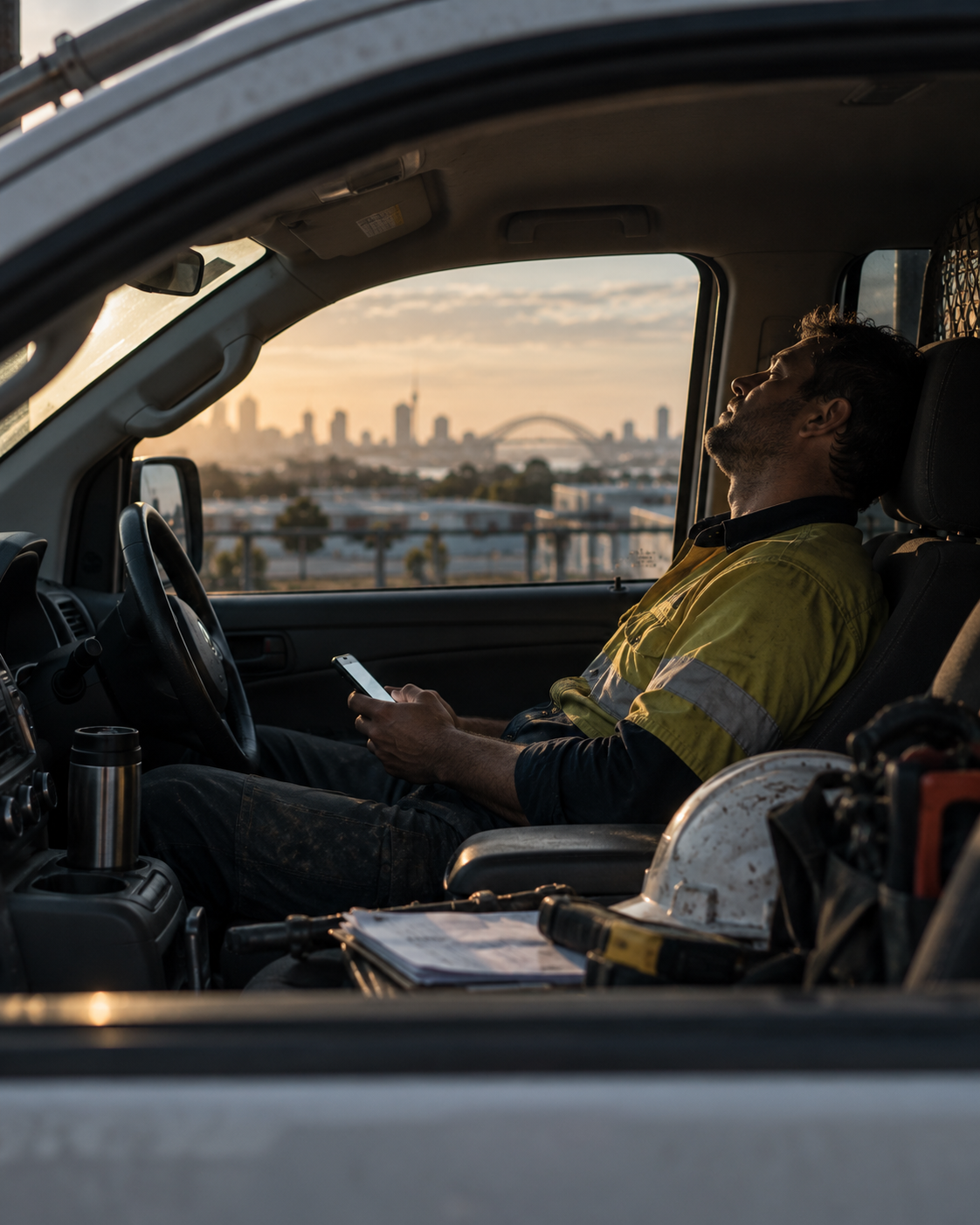
A tradie's day
On one side: a tradie whose week is a different sign-in app, a different induction, a different permit regime at every site. More time proving they're allowed to do the job than doing it.

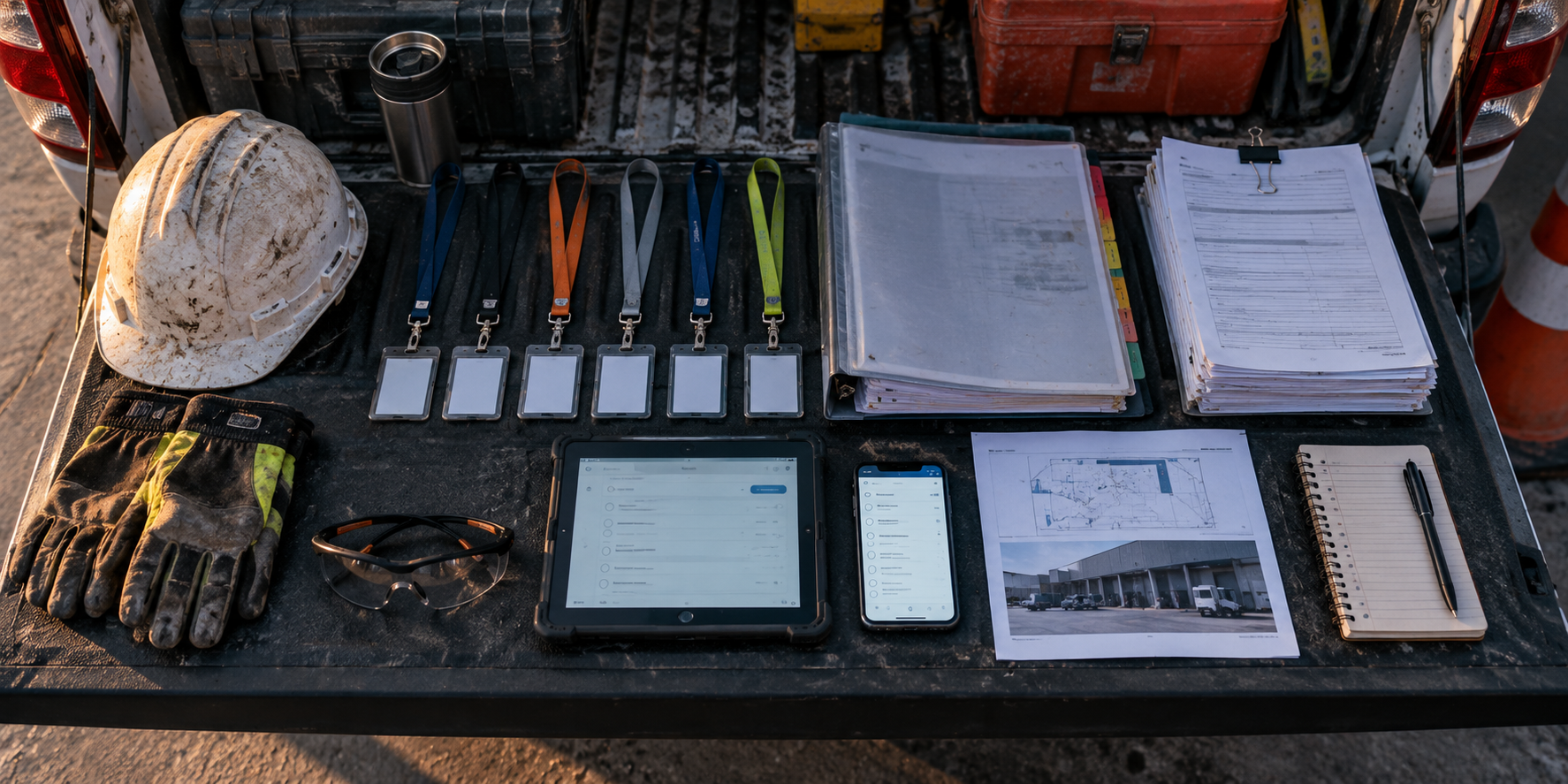
A generation ago, a maintenance job needed a visitor book at the gate. Today the same job needs a site-specific safety method statement, a current induction in whichever system this client mandates, a permit, a sign-in, photo evidence, and an upload to a portal that talks to nothing else.
Nobody designed this. Compliance grew layer by layer, one requirement on top of another. Nobody owns the total.
A typical job today
One job. Ten requirements before anyone lifts a tool.
And it lands on a business model that hasn't moved in 25 years: quote the job, do the job, invoice the job, priced on the trade work. The compliance load is a fixed cost on every job, and most of this work is small jobs in live buildings, where a fixed cost bites hardest.
Mandated by regulation. Priced by nobody.
So both ends of every job pay. The trade business absorbs hours it can't bill. Its client pays in time and risk: every team that arrives without the right induction, the right permit, current insurance becomes someone's problem to manage on site — and every workaround is a compliance gap someone now owns.
And here's what most people outside the industry don't know: under WHS regulation, maintenance work on a building is construction work. The person cleaning a roof carries almost the same compliance load as the person who built it. So when construction posts the worst productivity decline of any sector over the decade — with government's own reviews naming the administrative burden as a central cause — that's this work, measured under the only classification it has.
The industry's answer was to digitise the paperwork. The paperwork got better. The problem didn't, and the reason matters: a verification system can record that a contractor holds the right documents. It cannot get this worker to this site on this day, inducted, permitted, booked and ready. Recording compliance is not executing it.
High Risk Construction Work (HRCW) categories. A site-specific SWMS is mandatory whenever one is present, regardless of job value.
WHS Regulation 2025 (NSW).
From 1 July 2026, approved codes of practice are minimum performance standards.
WHS Act s 26A.
Construction lost 21.5 per cent of its productivity over the decade, the worst of Australia's 16 sectors. Under WHS regulation, maintenance work on a building is construction work: the stat measures this industry too.
ABS, via Master Builders Australia, 2026; WHS Regulation 2025 (NSW).
Facilities maintenance is so fragmented it has no statistical classification of its own.
The easiest way to feel what’s happened to compliance on site is to move it somewhere familiar.
Mains.
Order on Uber Eats. You're sitting at the table.
Sides.
Scan the QR code. On your phone. Different app.
Drinks.
Ask the waiter. The one normal thing.
Dessert.
Go to the bar. Yes. Physically walk there.
No single menu. No consistent process. Different rules at every table.
And at some restaurants... before you can even walk in the door, you must download their app, complete a training course, and get certified. Just to enter.
That’s what compliance looks like on site today. And we expect workers to get it right, every time.
Every app is reasonable on its own. Nobody designed the total. That is exactly what the compliance chain looks like from inside a work ute.
A tradie's day
On one side: a tradie whose week is a different sign-in app, a different induction, a different permit regime at every site. More time proving they're allowed to do the job than doing it.
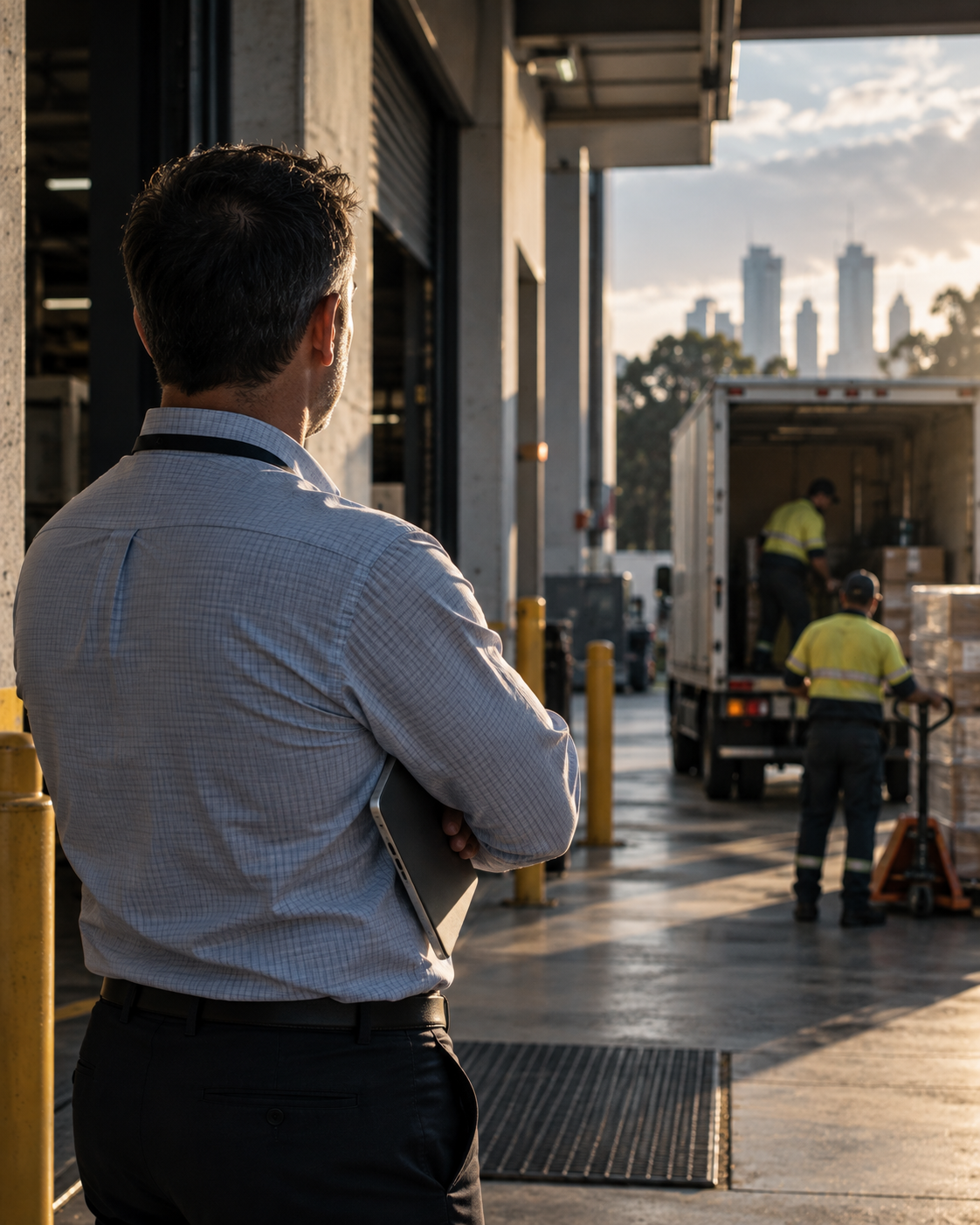
A facilities manager's day
On the other: the facilities manager, watching another team turn up without the induction, without the permit, without current insurance. Again. Another disruption to an already busy day.
Each side is sure the other is the problem. Neither is. Everyone in this chain is doing their job. The failure is that nobody, and no system, holds the whole job.
Every system in the chain holds a fragment of the job. No system holds the job. Someone reconciles the fragments by hand, on every job, every day. The cost is paid in margin, in time, and, at the end of the chain, in someone getting hurt.
That reconciliation is the work SafetyFlow does.
See what it does→